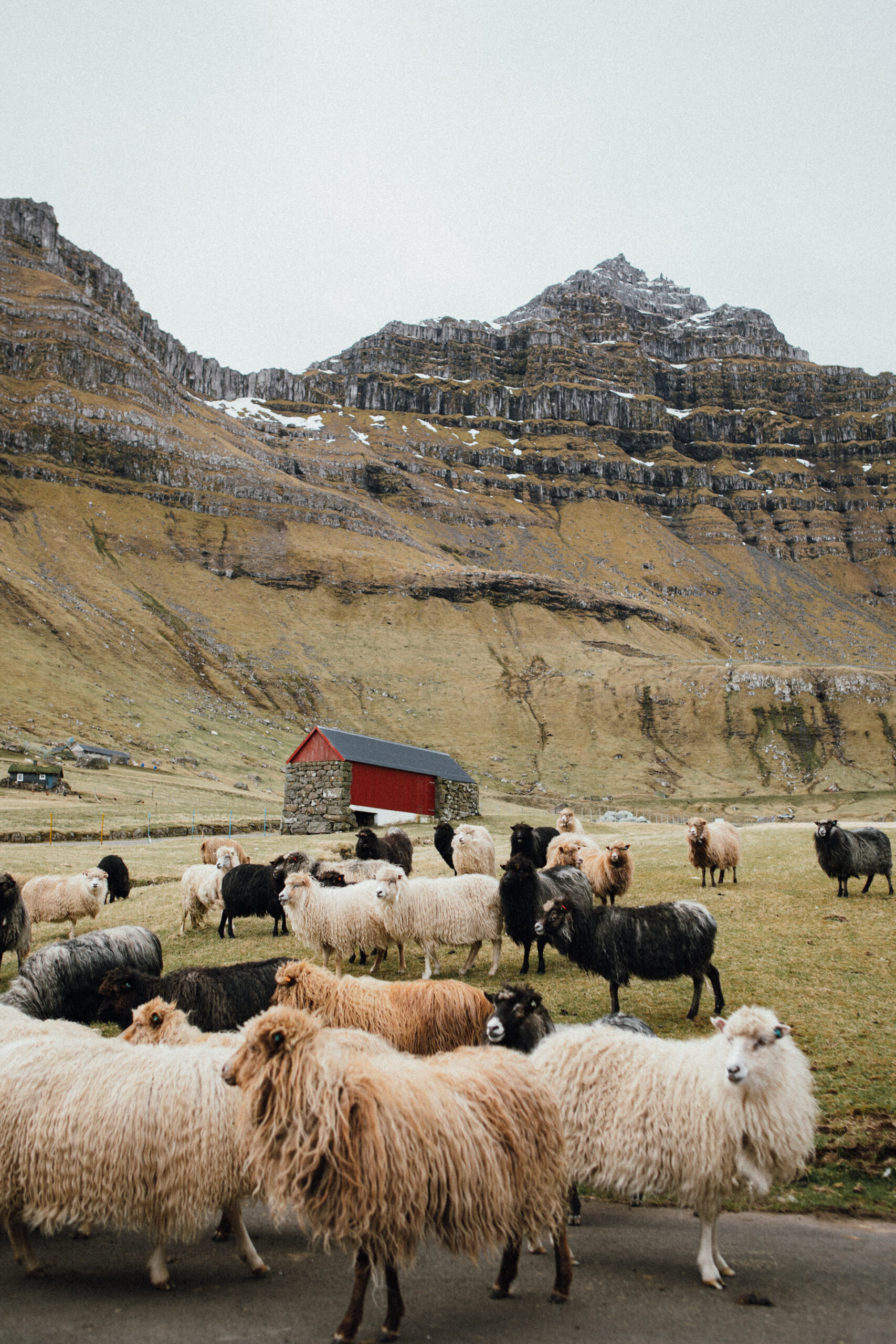
In the Faroe Islands, sheep farming follows a yearly cycle: spring is lambing season, summer is wool shearing, autumn is slaughter season, and winter is pairing season. For many visitors, the slaughter season may seem harsh, but it’s an essential part of the islanders’ way of life, ensuring that there is enough meat for the coming year. While the Faroese sheep outnumber humans, they are not self-sufficient in lamb meat, as they also import meat from other countries. However, the meat that is produced on the islands is used in traditional dishes, such as dried and fermented lamb, which are considered true delicacies.
Sheep farming here is a community event, with locals coming together for tasks like shearing. In summer, after the sheep are herded down from the mountains, they are divided into pens for shearing. Although electric shearing is becoming more common, many farmers still prefer to shear by hand, especially since many farms are located in hard-to-reach areas. This method, though more labor-intensive, is quieter and avoids the strong smell of petrol.
The sheep are also carefully monitored for health issues throughout the year, with farmers checking them for conditions like milk fever and administering necessary treatments. In autumn, lambs are slaughtered, and the process is thorough: after the sheep are beheaded, the skin is carefully removed without damaging the meat, a task requiring skill and strength. The sheepskin is then tanned into high-quality leather, and all parts of the animal—organ meats, blood, and fat—are used in traditional Faroese dishes, like blood pancakes (blóðpannukøkur) and fermented ram soup.
For tourists, it’s crucial to respect local customs. During the autumn slaughter season, visitors should be especially mindful of their surroundings. If you plan to hike in the mountains during this time, make sure to check with the local tourist information first. If you accidentally wander into areas where the sheep are being herded or caught, you could inadvertently disrupt the process, causing confusion or even splitting the herd. This can be damaging to the entire operation and make the farmers’ work much harder. Always ask for advice before heading into the mountains during this period.
In addition, many Faroese people are concerned about the increasing number of visitors who take photos of their homes without asking or even enter their homes uninvited. Respecting their privacy is essential—ask permission before taking pictures, and engage with the community in a friendly and courteous manner. In return, the islanders are known for their warmth and hospitality, often inviting visitors for coffee or a meal.
The Faroese way of life may seem challenging compared to urban living, but it is deeply sustainable. The islanders use every part of the sheep, from the meat to the wool to the horns, creating a system that minimizes waste and maximizes the value of their livestock. By understanding and respecting this culture, visitors can enjoy a truly authentic experience, learning about the traditions and practices that have sustained the Faroe Islands for centuries.

 8°C
8°C